
Video Production
Educational Video Companies: Build Best Educational Video
Educational videos have now become a powerful learning tool in Singapore. Whether in classrooms, corporate training, or online courses, people learn faster and better through video. Studies show viewers remember up to 95% of a message from a video compared to only 10% from reading text. Educational video companies make videos that help people learn,

In this article
Educational videos have now become a powerful learning tool in Singapore. Whether in classrooms, corporate training, or online courses, people learn faster and better through video.
Studies show viewers remember up to 95% of a message from a video compared to only 10% from reading text. Educational video companies make videos that help people learn, train, and understand topics more easily.
These video companies mainly serve three groups:
- Academic institutions such as universities, schools, and online learning providers that build course content
- Corporate training teams that create onboarding, compliance, and employee development videos
- Ed-tech companies that design digital learning platforms and structured video-based courses
Here, we will cover what educational video companies do, the types of videos they create, how the production process works, and the benefits for different users.
We will even show how organisations in Singapore use these services effectively.
What is an Educational Video Company?
An educational video company creates videos that teach people instead of simply promoting a product. A normal video production company focuses on making videos look attractive. An educational video company combines professional production with learning methods so viewers understand, remember, and apply the information.
Every project starts with one simple question: “What should the viewer actually learn from this video?” Everything else is built around that learning goal.
For example, if a Singapore hospital wants to train new nurses, the video should not only look professional. It must explain procedures clearly, follow healthcare guidelines, and reduce mistakes during daily work.
Who Actually Needs These Educational Videos
Educational videos are used by many organisations that need to teach, train, or explain information clearly.
- Universities & Schools: Create lecture recordings, online courses, lab demonstrations, and student orientation videos.
- Corporate L&D Teams: Train employees, explain company policies, improve skills, and support onboarding.
- Ed-Tech Companies: Build online courses, video lessons, software tutorials, and certification programmes.
- Government Organisations: Share public education, workplace safety, health campaigns, and digital learning content.
- Healthcare Providers: Explain medical procedures, patient care, rehabilitation, and health awareness in an easy-to-understand way.
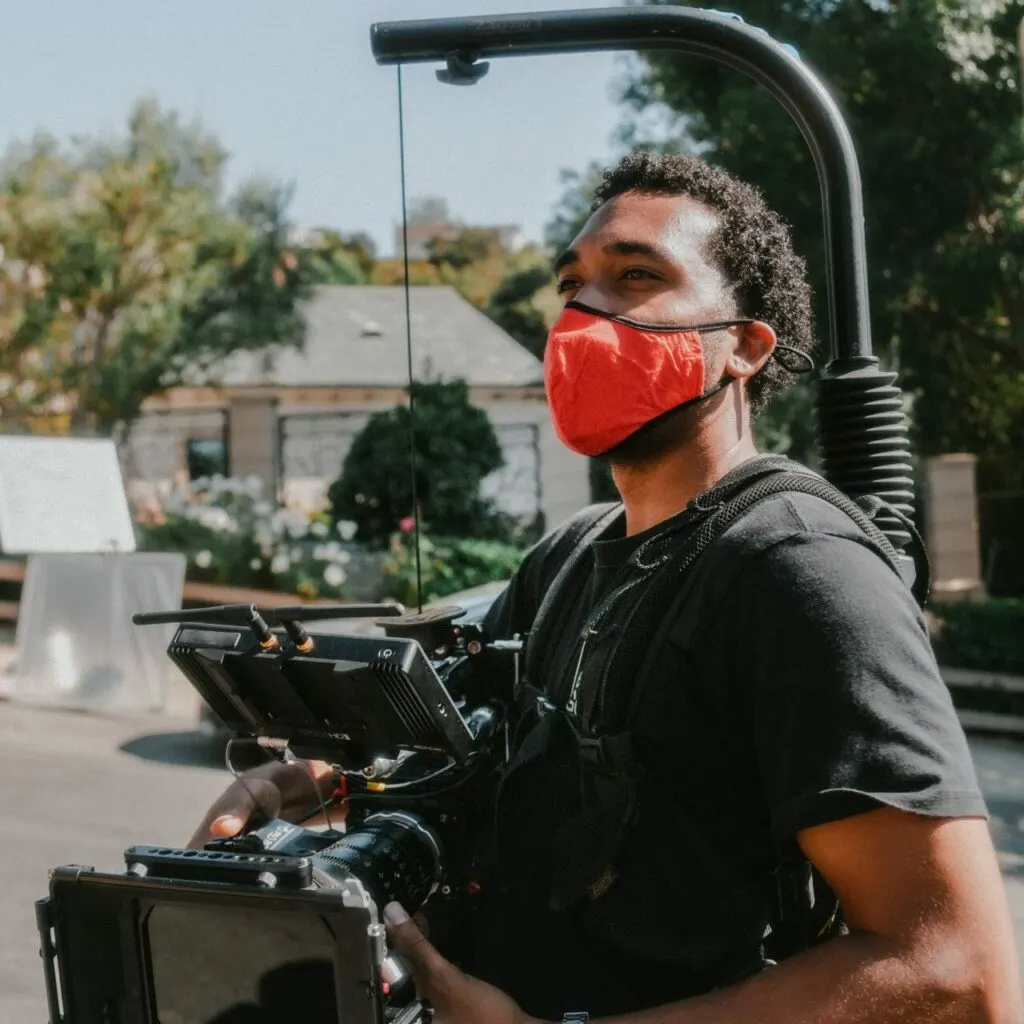
7 Types of Educational Videos, and Who Uses Each
Every educational video has a different purpose. The best educational video companies do not use one format for every project. They choose the video type based on who will watch it, what they need to learn, and where the video will be used.
Here are the most common educational video types used by organisations across Singapore.
|
Type |
Length |
Who Uses It |
Typical Use |
Examples |
|
Explainer/concept video |
3–7 min |
Everyone |
Breaking down one idea |
How photosynthesis works, what blockchain is, etc. |
|
Training / instructional video |
5–15 min |
Corporate teams |
Step-by-step task walkthroughs |
How to use CRM software, customer service process, etc. |
|
Lecture capture/course modules |
10–60 min, chunked |
Universities, online providers |
Recorded classes for asynchronous study |
MBA finance lecture, coding bootcamp session, etc. |
|
Microlearning video |
1–3 min |
Corporate, ed-tech apps |
Focus on one small learning point. Quick, mobile-friendly learning |
One Excel shortcut, a grammar rule, etc. |
|
Onboarding video |
5–20 min series |
HR teams, universities |
Welcoming new hires or students to the organisation |
Company introduction, office rules, campus tour. |
|
Compliance training |
10–30 min |
Regulated industries |
HR, data protection, workplace safety rules |
Data privacy training, workplace safety rules, etc. |
|
Course promo/recruitment video |
2–5 min |
Universities, training firms |
Selling a programme to future students or staff |
University course highlights, training program success stories. |
Most Singapore SMEs start with one or two of these, then expand once they see how much training time it saves.
How the Educational Video Production Process Actually Works
A successful educational video starts with keeping learning as the main priority. Many people think production begins with cameras and lighting. In reality, the first step is understanding what the audience needs to learn.
Once that is clear, the production team builds the video around that learning goal. Below is the typical process followed by a professional educational video production company in Singapore.
You may also connect internally with instructional video firms by developing a video blog from your President or head office for the employees with corporate news and updates.
Finally, working in educational video companies allows you to skip the hard sale and meet your customers where they are to solve their requirements. When done correctly, these videos may captivate your target audience and make you more recognizable by utilizing amazing music and visuals.
Incorporate Educational Videos Throughout Your Buyer’s Journey
Videos intended to educate your audience are put at the start of the Buyer’s Journey, known as the awareness phase. Your client is seeking information regarding their challenges at this point. Very practical!
By providing your audience with the data they require, educational video companies are assisting them in coming to you, which is an organic marketing strategy.
Step 1: Define the Learning Goals
Every educational video should answer one clear question. Before writing a script, the production team meets with the client to understand the objective.
They usually ask questions like:
- Who will watch this video?
- What should viewers know after watching?
- Is this for students, employees, or customers?
- Will viewers watch it once or use it as ongoing training?
For example, if a Singapore healthcare provider wants to teach patients how to prepare for surgery, the learning goal is very different from a company training new sales staff.
Step 2: Understand the Audience
Different people learn in different ways, so the video needs to fit who is watching it. A university student, a warehouse worker, and a software engineer all need different teaching styles.
Professional educational video companies look at:
|
What They Check |
Why It Matters |
|
Age group |
Affects language and examples |
|
Existing knowledge |
Avoids teaching too much or too little |
|
Language |
Keeps explanations easy to follow |
|
Viewing device |
Mobile videos need different layouts |
|
Learning Environment |
Office, classroom, home, or factory |
For example, a training video for construction workers in Singapore uses more demonstrations and fewer technical slides. On the other hand, a finance course may include charts, graphics, and screen recordings instead.
Step 3: Write a Script That Teaches Clearly
A good script sounds like a teacher. The script should explain ideas step by step using simple words. Instead of filling the video with marketing messages, educational videos answer questions naturally.
A strong script usually follows this order:
- Introduce the topic.
- Explain why it matters.
- Break the lesson into small sections.
- Show examples.
- Summarise the key points.
- Tell viewers what to do next.
Many educational video companies also review the script with subject matter experts before filming to make sure every fact is accurate.
Step 4: Plan the Visuals
Good visuals make learning easier. People remember information better when they hear an explanation and see it at the same time.
Depending on the topic, the production team may use:
- Live-action filming
- 3D Motion graphics
- 2D animation
- Screen recordings
- Infographics
- Product demonstrations
- Whiteboard animation
For example, a cybersecurity lesson is easier to understand with animated diagrams than with long paragraphs of text.
Step 5: Film the Content
In educational videos, clarity always matters more than style. These videos do not need dramatic camera movements. They need stable shots, clear audio, and visuals that support learning.
During filming, the production team records:
- Presenters
- Instructors
- Product demonstrations
- Classroom sessions
- Workplace activities
- Interviews with experts
If graphics or 2D or 3D animation are needed, those elements are created after filming.
Step 6: Edit for Learning
Editing should help people understand the lesson faster. Educational videos are usually edited differently from commercials.
Instead of fast cuts and flashy effects, editors focus on:
- Clear pacing
- Easy-to-read text
- Helpful graphics
- Simple transitions
- Visual highlights
- Chapter sections
If a topic is complex, editors often divide it into several shorter videos instead of producing one long lesson.
Step 7: Add Captions and Accessibility Features
Everyone should be able to learn from the video. Many organisations now include accessibility features as a standard part of production.
These include:
- Closed captions
- Full transcripts
- Large readable text
- High colour contrast
- Clear voice narration
For public sector organisations in Singapore, accessibility is becoming increasingly important as digital services continue to expand under the Smart Nation Singapore initiative.
Accessibility also helps people watch videos without sound on mobile devices.
Step 8: Review Before Publishing
Test the video before sharing it with everyone.
Professional educational video companies review every project for:
- Accuracy
- Sound quality
- Grammar
- Branding
- Learning flow
- Technical quality
Some organisations also ask a small group of learners to watch the video first. Their feedback helps identify anything that may be confusing before the final release.
Step 9: Publish and Measure Results
The work doesn’t stop once the video is published. Good educational videos continue to provide value long after production.
Companies often measure:
|
Performance Metric |
Why It Matters |
|
Watch time |
Shows engagement |
|
Completion rate |
Indicates learning interest |
|
Quiz scores |
Measures understanding |
|
Employee feedback |
Improves future training |
|
Student progress |
Tracks learning outcomes |
If viewers stop watching halfway through, the company can update the lesson instead of creating an entirely new course. Learning platforms and Learning Management Systems (LMS) also make it easier to monitor course completion and learner progress.
The Educational Video Production Process: All in One Table
Total Time: 8–14 weeks for a full educational video production in Singapore.
|
Phase |
Learning Design Focus |
Timeline |
|
1. Learning Objectives & Audience Analysis |
Set measurable objectives (Bloom’s Taxonomy) to guide content. |
1 week |
|
2. Instructional Design & Scripting |
Apply cognitive load theory, spaced repetition, and active learning. |
2–3 weeks |
|
3. Storyboarding & Visual Design |
Use visual learning principles and dual coding theory. |
1–2 weeks |
|
4. Production & Animation |
Visuals support understanding. |
2–4 weeks |
|
5. Post-Production & Accessibility |
Focus on retention-friendly pacing and accessibility. |
1–2 weeks |
|
6. Pilot Testing & Iteration |
Focus on learning effectiveness and comprehension. |
1–2 weeks |
The Rules You Actually Need to Follow for Educational Video Production
Singapore does not require every educational video to meet accessibility standards by law, but best practices are becoming more important. The IMDA recommends WCAG 2.1 Level AA for digital content, which means adding captions, transcripts, and clear on-screen text.
For videos showing employees or personal information, the Personal Data Protection Act (PDPA) requires companies to get permission before filming and clearly explain how the footage will be used and stored.
How to Choose an Educational Video Company in Singapore
Five questions separate a real educational video partner from a general production house.
- Do they have instructional designers on staff, or just camera operators? Ask how they structure a script for retention, not just for good visuals.
- Have they worked in your sector before? A team that’s made university course modules may not know compliance training conventions for a bank, and the reverse is true, too.
- Can they handle your volume? A single course needs a different setup than an entire curriculum of 100+ videos for an ed-tech platform.
- Do they build in captions and transcripts by default? If accessibility is an afterthought in the quote, it’ll be an afterthought in the delivery.
- Can the video plug into your LMS? Ask about SCORM or xAPI support if you need completion tracking for compliance records.
If a quote doesn’t mention learning objectives at any point in the conversation, that’s usually a sign they’re pricing it as a marketing video, not a training one.
The Singapore Market Right Now
The demand for educational videos in Singapore is rising due to strong national training policies. In 2024, around 260,000 people used SkillsFuture Credit, and online learning platforms saw major growth.
The government also introduced a S$10,000 SkillsFuture Enterprise Credit to support training content. Universities like NUS already use video for teaching and staff training, making it a standard learning tool.
For production, options include local studios in Singapore, like Moving Image (best for quality and compliance), regional teams in nearby countries (lower cost), and international specialists (for niche work).
For anything involving Singapore compliance rules or MOE-linked content, local expertise is often preferred.
Wrapping Up
So, to sum it up, educational video companies combine instructional design with professional video production to create videos that help people learn effectively. Whether for universities, corporate training, or ed-tech platforms, they focus on clear learning outcomes rather than just high-quality visuals.
At Moving Image, we build training videos, course modules, and e-learning content for universities, corporate L&D teams, and ed-tech platforms across Singapore.
Ready to create educational video content?
Contact us to discuss your project or view our Education Portfolio to see how we help universities, businesses, and ed-tech companies create engaging learning videos.
FAQ
FAQs
The cost depends on the video length, complexity, and type of production needed. Simple explainer videos cost less, while full training courses with animation and scripting cost more. Most companies give custom pricing based on learning goals, number of videos, and production style.
Yes, usually the company needs to provide subject experts or basic information about the topic. The video team then turns this knowledge into a clear script and easy-to-understand lesson.
Yes, educational videos can be updated if rules, tools, or processes change. Most companies keep project files so they can edit or replace parts without redoing the whole video.


